
Every Q4, Nigerian boards approve between ₦15 million and ₦80 million for end-of-year gatherings in Victoria Island, Ikeja, or Maitama event halls. Yet by January, HR inherits the familiar aftermath: zero retention impact, strained cross-functional communication, and unaddressed capability gaps. When evaluating corporate team building Lagos companies often realize that traditional open-bar celebrations buy fleeting consumption rather than lasting organizational value.
This guide outlines how to redirect that same budget into a high-ROI team experience that aligns staff, builds core capabilities, and prepares your workforce for the year ahead..
The Q4 Budget Dilemma

Most Tier-1 banks, telcos, fintechs and energy firms operate under use-it-or-lose-it budget windows. Unspent funds in Q4 rarely go to strategic priorities. They flow into event management, where the cost per head is high and the return is invisible.
The financial logic is weak on three counts:
- Zero capitalisation. Training and capability-building can qualify for Industrial Training Fund (ITF) reimbursement, up to 50% of qualifying expenditure for compliant entities. Party logistics qualify for nothing: no ITF recovery and no tax shielding.
- Liability exposure. Open-bar events raise the risk of harassment and misconduct claims, informal breaches of confidentiality between junior staff and executives, and a measurable productivity drop the following working day. HR spends much of Q1 cleaning up.
- No retention effect. In a high-inflation market with aggressive talent poaching, staff read an open bar as performative. A four-hour party does not offset salary erosion, cross-functional bottlenecks or weak line management.
The context matters as much as the cost. Employees in Lagos and Abuja are absorbing currency volatility, fuel and transport increases, food inflation and heavy family obligations. Many have already spent two hours on the Lekki-Epe Expressway, the Third Mainland Bridge or an Abuja satellite corridor before reaching their desks. Mandatory evening “fun” without substance registers as another chore, and a lavish bash while real wages feel squeezed breeds cynicism toward leadership.
What Nigerian teams want from leadership is candour: the plan for business resilience, changes to remote or hybrid policy, bonus and health coverage decisions, and an honest view of the road ahead. That builds more trust than cocktails.
Rethinking Corporate Team Building in Lagos: The Shift to Measurable ROI
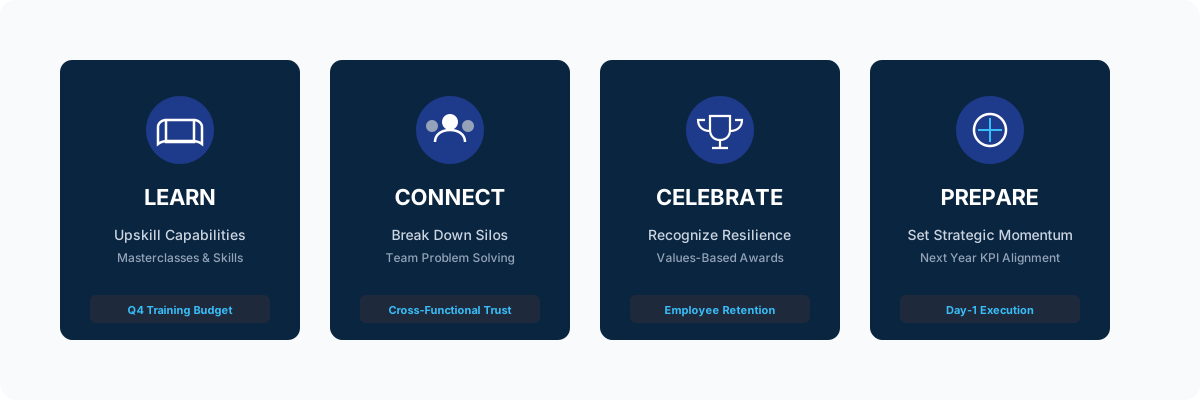
Traditional corporate team building in Lagos and Abuja often fails when it focuses purely on games without behavioral takeaways. The fix is not to cancel the celebration. It is to make the celebration the final stage of a four-part framework:
- Learn: build a capability the business needs in the coming year.
- Connect: break functional silos through structured cross-team work and seating.
- Celebrate: recognise the people and behaviours you want repeated.
- Prepare: leave the day with clear priorities, targets and policy changes for Q1.
The same hall, AV, catering and transport budget now serves two business objectives instead of one. That is the capital-efficiency argument in a sentence.
The “Learn and Celebrate” Blueprint
Morning (09:00 – 13:00): Upskilling and Alignment
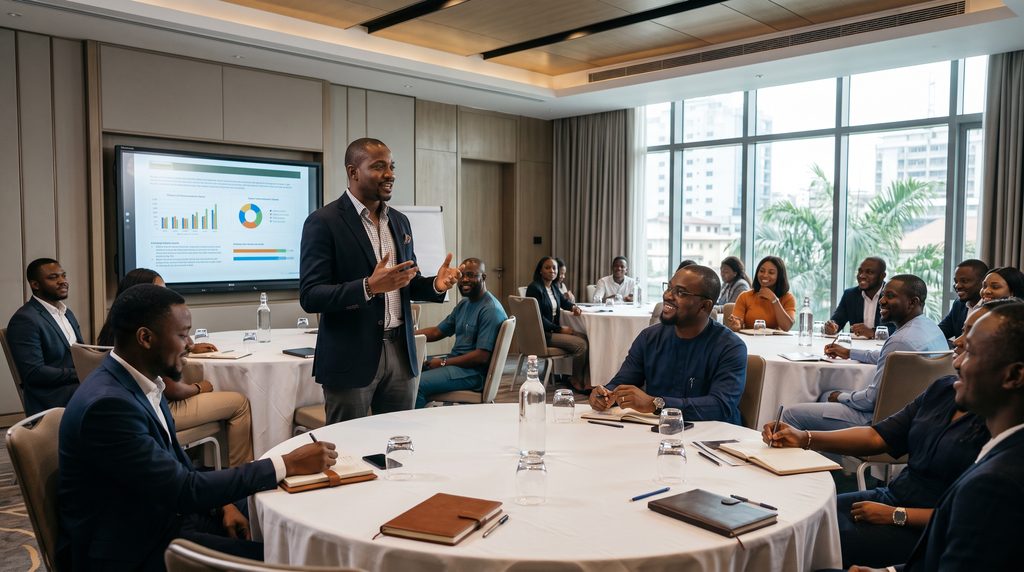
Open with leadership, not entertainment. The C-suite presents the audited year in review and cascades the targets for the next fiscal year. Then run high-impact micro-sessions on the capabilities that move your numbers:
- Emotional Intelligence: conflict handling, feedback and managing up.
- Sales Excellence: commercial execution and client retention.
- Customer Service: service recovery and operational resilience under pressure.
- Leadership Alignment: how managers translate strategy into weekly priorities.
Where the budget allows, add a cross-silo working session. Mixed squads from Finance, Technology and Operations diagnose one real friction point, such as a slow handoff between Sales and Compliance, and present fixes to a senior panel.
Transition (13:00 – 14:30): Reset and Connect
A structured executive lunch with deliberate cross-functional seating. No departmental tables. Short peer storytelling replaces small talk and does more to dissolve silos than any icebreaker.
Afternoon (14:30 – 19:00): Connection and Recognition
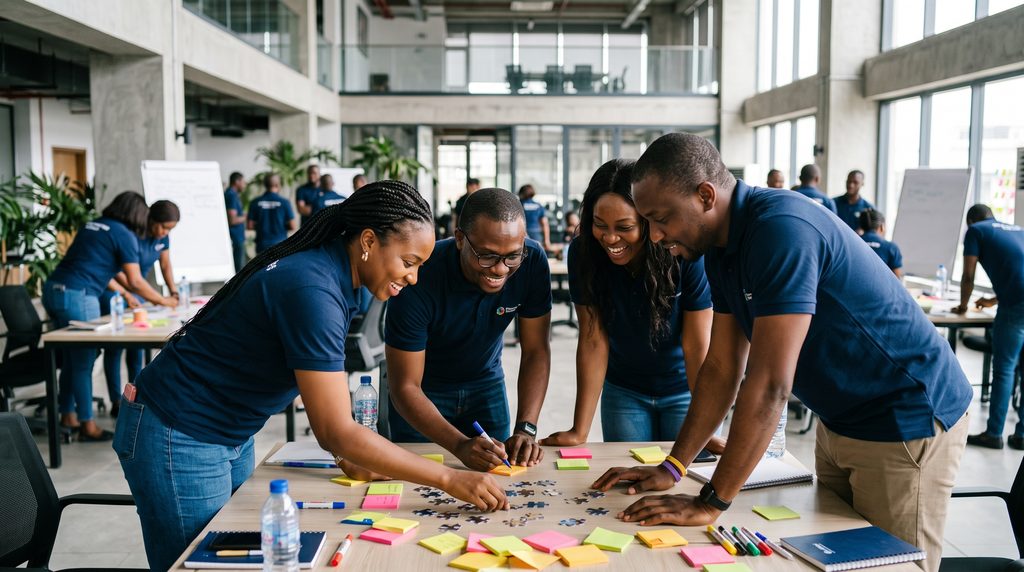
- Structured team challenges: problem-solving exercises that require collective trust, not juvenile party games.
- Values-driven awards: honour the enablers, the people who held operations together, and the culture carriers, not only the top sales billers.
- A relaxed evening: dinner, music and social time, with visible executive presence at the start and a clear executive close.
High-ROI Formats for Corporate Team Building Lagos Companies Need
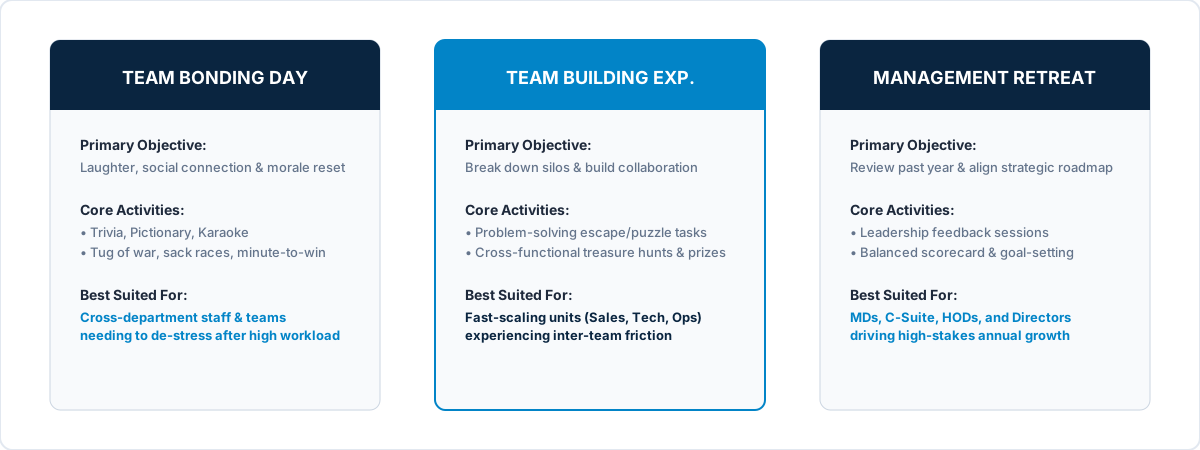
Not every organisation needs the same day. Match the format to your maturity.
Team Bonding Day
Best for newly merged teams, fast-growing companies or organisations with low cross-functional familiarity. The emphasis is trust and relationships, with light learning content.
Team Building Experience
Best for established teams with visible friction, such as slow handoffs, blame cycles or low collaboration. The emphasis is structured problem-solving, facilitated debriefs and behaviour change that can be observed afterwards.
Strategic Management Retreat
Best for mature organisations entering a pivot, restructure or aggressive growth year. The audience is leadership and senior management. The emphasis is strategy testing, execution planning and alignment before the cascade to the wider workforce.
Most mid-sized firms are best served by the Team Building Experience. Enterprises often combine a management retreat earlier in Q4 with a full-staff Learn and Celebrate day later.
Actionable Planning Checklist for HR Leaders
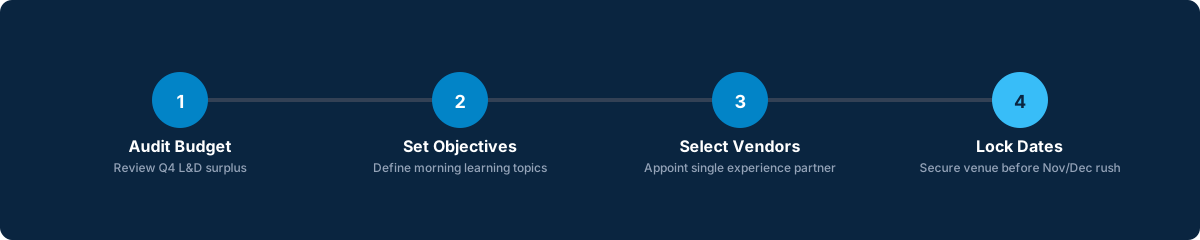
| Step | Action | What good looks like |
|---|---|---|
| 1. Audit Q4 budgets | Separate remaining entertainment spend from allowable L&D expense. Confirm ITF eligibility and documentation requirements with your finance and compliance teams. | A target of 40% to 60% of venue, facilitation and content cost documented under training recovery frameworks. |
| 2. Set learning objectives | Choose two or three capabilities tied to next year’s business plan. Define how you will measure them. | Objectives written before any vendor is briefed, plus a baseline for each metric. |
| 3. Select logistics and vendors | Brief venue, AV, catering, facilitators and transport against the agenda, not the other way round. | One accountable lead, a run-of-show document and a contingency plan. |
| 4. Lock dates early | Secure the venue and facilitators before peak December demand fills the best halls in Lagos and Abuja. | Dates confirmed with deposits paid by early Q4, with staff diaries blocked. |
Build measurement in from the start. The metrics boards respond to are:
- Collaboration velocity: cycle time on multi-team handoffs, comparing Q1 against a Q3 baseline.
- Strategy alignment: a five-question pulse survey at 14 and 45 days, testing whether staff can name their department’s top three priorities. In our benchmarking, alignment-led events reach above 85% comprehension, against below 40% for party-only formats.
- eNPS and psychological safety: confidence in executive direction and willingness to take calculated risks. A shift of 15 to 25 points is a realistic target.
- Cost per head against ITF yield: entertainment spend versus recoverable learning spend.
Turn Your Q4 Budget Into a Q1 Advantage
TalentForge provides high-impact corporate team building in Lagos and Abuja designed around business performance: curriculum design, facilitator sourcing, cross-silo challenge design, awards frameworks, venue and vendor management, ITF-ready documentation, and post-event measurement. Your team gets one accountable partner from the first budget conversation to the 45-day pulse survey.
Peak dates and facilitators go early. Book a consultation or write to info@talentforgesolutions.com.ng.