
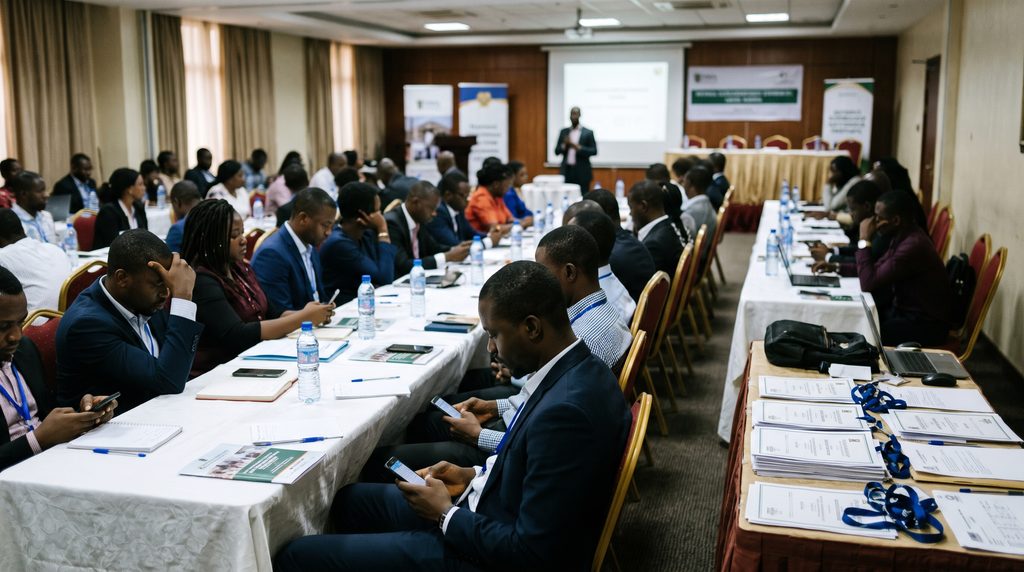
Every quarter, Nigerian firms book a hotel ballroom for another staff workshop. Staff collect certificates, enjoy the lunch, and return to old habits on Monday.
Serious corporate training companies in Nigeria turn learning budgets into measurable commercial output. They treat every training naira as an investment that must return revenue.
This article shows where generic training fails and what actually works instead. Read it carefully before you approve the next learning budget for your teams.

Why Most Corporate Training Budgets Deliver Zero Return in Nigeria
Most corporate training budgets fail long before the first facilitator begins to speak. The failure starts with how Nigerian companies choose and brief their training vendors.
Most corporate training companies in Nigeria sell attendance, a certificate, and a pleasant lunch. Very few commit to visible changes in behaviour and measurable business results.
Off-the-Shelf Slide Decks Ignore Local Reality
Many vendors recycle foreign slide decks with a few Nigerian names added. The examples feel distant and irrelevant to your Lagos sales team today.
Foreign templates ignore Nigerian customer objections, procurement habits, and the realities of local markets. They also skip informal approval chains and the pressure of tight cash flow. Participants cannot apply lessons that never reflect their own daily working reality.
Zero Pre-Training Skill Diagnostics
Few corporate training companies in Nigeria diagnose team gaps before training everyone in one room. Nobody checks which department has the real skill gap or why it exists.
Your finance team may need sharper reporting and forecasting skills this year. Your sales team may need negotiation practice with real buyers and real objections. One generic course cannot solve both problems and wastes everyone’s valuable time.
No Post-Training Accountability
Training without manager follow-up fades much faster than most executives would ever expect. Teams often forget eighty percent of workshop lessons within just two weeks.
No manager reviews the new skills and no KPI measures the change. The certificate goes into a drawer and the training budget is gone. That is how millions disappear without a single line item showing the loss.
What Wasted Spend Looks Like in Practice
Imagine a Lagos firm that spends thirty million naira on annual staff workshops. Nobody measures behaviour afterwards and no senior leader owns the final result.
If eighty percent of lessons fade, roughly twenty-four million naira has simply vanished. Only six million naira of real learning remains to benefit the business. That is an unacceptable return for any chief executive to approve quietly.
The Hidden Business Cost of Untrained Managers and Frontline Staff
Poor training rarely appears as a clear loss line on your management accounts. Instead it appears as staff attrition, customer churn, and repeated operational mistakes.
Costly First-Time Managers
Your best technical performer gets promoted into a team leadership role overnight. Nobody teaches that new manager how to coach, delegate, or give feedback. Strong staff then resign because they feel unsupported by a weak boss.
Replacing one mid-level hire through an executive search firm Nigeria costs half their annual salary. Multiply that figure across one struggling team and the annual loss becomes serious.
Lost Sales and Customer Churn
Weak negotiation habits quietly cost Nigerian businesses repeat corporate contracts every single quarter. Sales teams discount too early and avoid hard pricing conversations with buyers.
Service teams make it worse with slow responses and poor complaint handling. One unhappy procurement manager can quietly end a profitable three-year client relationship.
Compliance and Operational Errors
Unstructured onboarding without HR process outsourcing Nigeria leads to avoidable payroll and procurement mistakes. New hires then learn company processes from busy colleagues who are also guessing.
A single wrong tax remittance or vendor payment can trigger heavy penalties and disputes. Regulators and clients never accept “we were never trained” as an excuse.
Each of these costs is avoidable through targeted and role-specific capability building. Yet none of them appears on a training invoice or progress report. Executives only notice them when a good client or manager walks away.
How Leading Corporate Training Companies in Nigeria Drive Measurable ROI
The best providers behave like business advisors rather than event organisers or lecturers. They begin with your commercial targets and design the training backwards from there.
Role-Specific Needs Assessment
Advisors audit real workflow bottlenecks and KPI gaps before writing a single training module. They interview managers, observe teams, and review existing performance data in detail.
The result is a focused list of skills that directly move revenue. Anything that does not support those targets is removed from the programme.
Practical Simulation Over Theory
Strong facilitators use live Nigerian business case studies, roleplays, and your own company templates. Participants practise difficult conversations in the room before facing real customers outside.
A sales manager rehearses a price objection from a Lagos procurement officer. A supervisor practises a difficult feedback session with a struggling team member.
Facilitators should hold real commercial experience in the sectors they are teaching. Academic knowledge alone rarely changes how a negotiator behaves under pressure.
90-Day Post-Training Transfer
Learning only counts when behaviour changes visibly on the job every single week. Supervisors track that change over ninety days using performance management consulting Nigeria scorecards.
Managers hold short monthly check-ins with each participant and coach on remaining gaps. Scores are then reviewed against agreed sales, retention, and error rate targets.
Structured employee training and development Nigeria programmes registered with the Industrial Training Fund (ITF) drive revenue. Each module links to a measurable target such as win rate or staff retention. Leaders can then see exactly which learning hours produced which commercial results.
Metrics Executives Should Demand
Ask every provider which business metrics will move and by how much. Reject any proposal that promises only happy participants and high satisfaction scores.
- Sales: win rate, average deal size, and repeat contract value per account.
- Retention: voluntary attrition and exit rates in teams led by newly trained managers.
- Operations: error rates, rework hours, and audit findings across trained departments each quarter.
- Customer: complaint resolution time, repeat purchases, and client renewal rates after training.
Record a clear baseline for these numbers before any training session begins. Compare them again at thirty, sixty, and ninety days after the programme.

Four High-Impact Programs Every Nigerian Enterprise Should Prioritize
Start with the four tracks that most directly affect revenue and retention. Each track aligns with Chartered Institute of Personnel Management of Nigeria (CIPM) competency standards:
- First-Time Manager & Supervisory Leadership: Builds coaching and feedback skills that cut team attrition.
- B2B Consultative Sales & Key Account Growth: Teaches negotiation and account planning that win repeat contracts.
- Workplace Ethics, Compliance & Operational Excellence: Embeds process discipline that prevents costly payroll and procurement errors.
- Customer Experience & Service Recovery: Equips frontline teams to resolve complaints fast and protect client relationships.
Each track runs as a short cohort programme, not a one-day event. Participants apply one new skill each week on live company work assignments.
Reputable corporate training companies in Nigeria will help you sequence these tracks sensibly. They match each track to your budget, headcount, and most urgent business risks.
Begin with the track matching your biggest cost across direct or staff outsourcing company Nigeria teams. Never train every department on every topic during the very same quarter.
Turn Your Next Training Budget Into Measurable Commercial Growth
Your next training budget should produce higher revenue, stronger retention, and fewer errors. Anything less is simply an expensive day away from the office for staff.
Top corporate training companies in Nigeria start every engagement with hard evidence, not guesswork. Our Training Needs & Skill Gap Audit gives you that evidence before you spend.
The audit identifies your real skill gaps by department, role, and performance level. It then ranks each gap by its likely impact on revenue and retention. You then receive a clear roadmap with targets, owners, and ninety-day scorecards.
MDs and HR leaders should choose corporate training companies in Nigeria that accept accountability. Book your audit today and start building a team that truly performs.
Explore our corporate training and talent development services to book your Skill Gap Audit today.